Suspended Sediments
Pollution Tutorial
Runoff from agricultural fields, urban areas, and construction sites can carry away soil, producing cloudy or muddy water. Soil in the water, called suspended sediment, blocks out the sunlight that bottom-dwelling plants in lakes and rivers need to survive. If these plants, called submerged aquatic vegetation (SAV), are deprived of sunlight for extended periods, they will die.
SAV is an important component of the ecosystem because it provides a habitat for aquatic organisms, produces oxygen, and traps sediment. If hypoxic conditions occur — a state where the level of oxygen in the water is very low — the aquatic organisms living there must either move or die. Often, suspended sediments and excessive nutrients are both present, creating a harmful combination of eutrophic conditions — when there is an overproduction of organic matter — and cloudy water. Suspended sediments can also clog the gills of fish and other aquatic organisms.
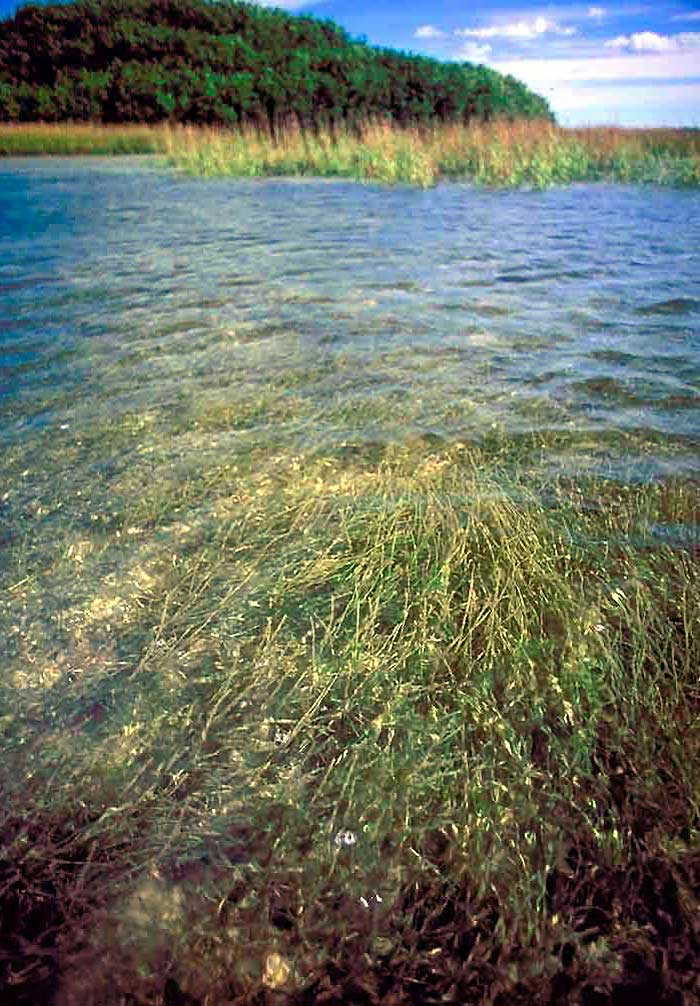
Submerged aquatic vegetation (SAV) provides vital habitat for aquatic organisms, produces oxygen and traps modest amounts of sediment. However, if there are excessive amounts of suspended sediment, or hypoxic conditions occur - a state where the level of oxygen in the water is very low — SAVs die, thus leading to unhealthy conditions for fish and other aquatic organisms that rely on SAV for habitat. This image shows a healthy aqautic ecosystem free of suspended sediments and abundant with healthy SAVs.
Pollution Lessons
- Welcome
- A Brief History of Pollution
- Point Source
- Nonpoint Source
- Urban and Suburban Areas
- Agricultural Operations
- Atmospheric Inputs
- Forestry and Mining Operations
- Marinas and Boating Activities
- Nutrients
- Suspended Sediments
- Pesticides and Toxic Chemicals
- Bacteria, Viruses, and Trash
- Research, Monitoring, and Assessment
- Controlling Nonpoint Source Pollution
- What You Can Do
- References
- Roadmap to Resouces
- Subject Review (PDF)
Categories of Pollution
Pollutants from Nonpoint Sources