What was the first national marine sanctuary to be designated?
The USS Monitor was designated our first National Marine Sanctuary on January 30, 1975
The USS Monitor was the prototype for a class of U.S. Civil War ironclad, turreted warships that significantly altered both naval technology and marine architecture in the nineteenth century. The vessel was constructed in 110 days.
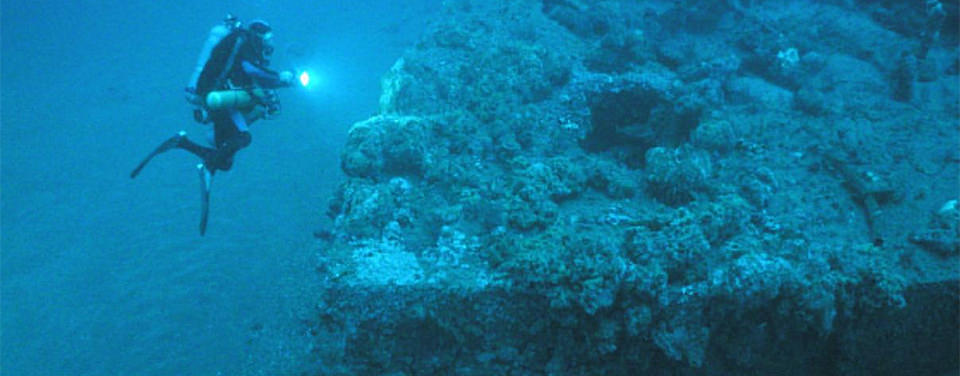
The USS Monitor was the first of the marine protected areas that make up the National Marine Sanctuary System. The sanctuary boundaries protect the wreck of the USS Monitor, which lies southeast of Cape Hatteras, North Carolina. Since its sinking in 1862, the Monitor has become a productive artificial reef.
While most of the research conducted in the Monitor sanctuary has focused on the archaeological documentation of the shipwreck, NOAA scientists are now interested in studying the water quality and marine environment of the wreck site. A NOAA data buoy installed in the sanctuary in 2006 is providing scientists and the public the opportunity to monitor weather and sea conditions 24 hours a day.
Management of the sanctuary is focused on preventing further deterioration of the wreck, recovery of important ship components and artifacts, and protecting the wreck from damage by human activities such as vessel anchoring and fishing. Access is generally limited to scientific research conducted under a permit issued by NOAA; however, special-use permits are issued for non-research visits to this historic vessel.